There is a moment in every good action video that a technically skilled videographer can miss and a great one cannot. The climber’s foot slipped and caught. The cyclist standing out of the saddle at the top of the climb. The skier took the wrong line and recovered. The instant the runner realizes she has the podium. If the camera is in the right place, tracking the right subject, at the right speed, that moment lives forever. If it is not, no amount of color grading rescues the shot.
The people who capture those moments consistently are a specific kind of videographer, and hiring one is a different exercise from hiring a general videographer or a drone pilot for a static shoot. They need to know the sport well enough to anticipate what is about to happen, own gear built for movement and speed, and work fast because outdoor action rarely happens twice.
This guide walks through exactly how to choose the best action videography company for your project: how to read a portfolio, which credentials still matter and which are specific to this discipline, what packages typically look like for athletes, brands, and personal projects, how multi-camera coverage actually works, whether a single event or an ongoing relationship makes more sense, and the turnaround difference between a highlight reel and a full-length edit.
What Action Videography Actually Is (and What It Is Not)
Action videography is the discipline of capturing motion, athletes, sports, outdoor activities, at speed, in real conditions, and turning it into video that carries the energy of the original moment. It sits at the intersection of sports coverage, cinematic filmmaking, and outdoor documentary work, and its practitioners tend to identify with their subject matter as much as with their craft.
It is not the same as general videography, and understanding the difference is where good hiring starts. A wedding videographer works within a known program with fixed positions and predictable moments. A corporate videographer works in controlled interiors with cooperative subjects. An action videographer works with unpredictable, fast-moving subjects in unpredictable conditions, often outdoors, often at some risk to gear and sometimes to person, and they have to make the shot work in the one attempt they get before the athlete is a hundred yards down the trail.
That shapes everything: the gear, the workflow, the pace, and the temperament of the person behind the camera. A great sports videographer is not just a videographer who happens to shoot sports. They are a distinct specialist.
How to Choose the Best Action Videography Company: A Vetting Framework
Work through these in order. Each layer surfaces problems you cannot see from a homepage.
Look at Their Portfolio in Your Specific Discipline
Action video is not one genre. Filming climbing is not filming cycling, and filming cycling is not filming skiing. Each sport has its own rhythm, angles that flatter it, and moments that make the story. A videographer whose reel is entirely mountain biking may be excellent and still not be the right fit for a trail-running project.
When you review a company’s work, look for pieces in the same sport, or at least the same broad category, as the one you are hiring for. If they can show you three finished edits in your discipline, you have a signal. If their reel is a smorgasbord of everything, ask honestly whether any of it looks like what you want to make.
Judge the Finished Edit, Not the Best Clip
Every action videographer’s Instagram is their five best shots from a hundred shoots. That is close to meaningless as a hiring signal. Ask to see a finished, delivered edit, ideally two or three, from real projects. The finished piece tells you about pacing, story, sound design, color, and whether the videographer can build a video that holds together beyond a single satisfying moment.
Look specifically at whether the video actually moves you as a viewer. Great action edits use quiet moments to earn the peaks. If every shot is at eleven, the video reads as a highlight reel from a hundred yards away rather than a story you feel.
Check That They Understand the Sport
This one is the most underrated. A videographer who understands your sport knows when to be ready, where the story is, and what the shot needs to include for it to make sense to another practitioner. They know that a climber locking off before a hard move is where the tension lives, not the flailing recovery. They know a cyclist’s face two hundred meters from the summit tells more than the summit itself. They know the ski line before the athlete does.
You can test this on the intake call. Ask what part of your sport they think is most cinematic, or what moments they specifically look for. A generalist gives a generic answer. Someone who knows the sport lights up.
Verify the Basics That Still Apply
Every professional videography company should carry liability insurance and, if their work includes drone footage, hold FAA Part 107 certification for anyone flying commercially. This is background hygiene, not the differentiator, but confirm it exists. Any operator hesitant about either question is one to keep looking past. The full case for these credentials, and why they matter more than most people realize, is worth understanding in depth if you are new to hiring in this space, but for action work specifically the sport literacy and gear conversation ahead of us matters more than any single credential.
Look at Their Camera Systems
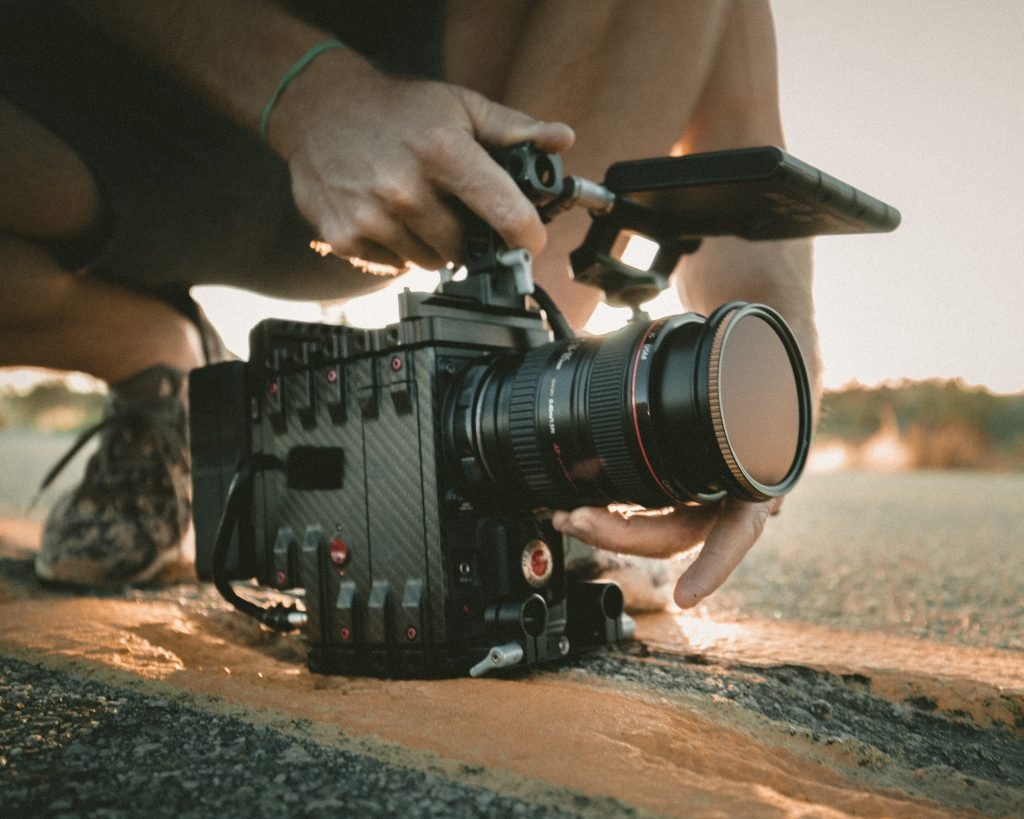
Gear does not make the videographer, but gear ceilings can genuinely limit what the videographer can do. For action work, look for evidence of appropriate systems: stabilized cameras or gimbals for smooth motion, gimbal drones for aerial pursuit shots, high frame rates for slow-motion, ND filters for hard mountain light, action cams for POV and hard-to-mount angles, and reliable audio when it matters. Nothing on that list makes a bad videographer good, but their absence caps what any videographer can deliver.
Do They Offer Packages for Athletes, Brands, or Personal Projects?
This is one of the most useful questions to ask early, because the answer tells you whether you are looking at a company built for someone like you.
Athlete and Team Packages
Athletes typically need a mix of pieces: a season highlight reel for sponsors and social, individual clip content for personal channels, and sometimes competition or event coverage. Look for packages that scope this specifically, priced for a working athlete rather than a corporate marketing budget. Ongoing relationships tend to serve athletes better than one-off shoots, because the videographer builds an understanding of the athlete’s style, sponsors, and calendar over time.
Brand and Commercial Packages
Brand work is a different animal. Sports and outdoor brands need story-driven content that features product in a way that does not feel like an advertisement, and they usually need multiple deliverables from a single shoot, a hero video, cut-downs for social, stills for print, and often raw footage for internal use. Look for a company with commercial experience, a clear track record of brand deliverables, and comfort working with a client-side timeline and creative brief.
Personal Projects and Enthusiasts
Personal projects, capturing a memorable ride, a season of ski touring, a bucket-list race, live in their own category. Videographers who serve this well tend to offer shorter, more affordable packages built around a single day or event, with a highlight edit rather than a full production. If you are the client here, be honest about scope and budget upfront; a good action video production company will tell you plainly whether they are the right fit or refer you to someone whose model matches your project.
Whichever category you fall into, ask for the specific package details in writing. A company that has genuinely built offerings for different audiences will have thought this through. One that has not tends to give you a vague “we can do whatever you need” answer that resolves in an uncomfortable way later.
Do Boulder Action Videographers Provide Multi-Camera Coverage?
Yes, and it is genuinely worth understanding what multi-camera coverage adds and when it is necessary. Multi-camera means running two or more cameras simultaneously across a shoot, either operated by different videographers, mounted in different positions, or used in different roles, one hand-held tracking, one wide static, and often a drone in the air.
For most action content, this is not a nice-to-have; it is the reason the finished edit feels cinematic instead of one-perspective. A single camera can only show you one moment from one angle. Multi-camera coverage gives an editor real material to build with: a wide establishing shot, a tight on-the-face reaction, a chase pursuit, an aerial reveal, cut together into a sequence that reads like a story.
The trade-off is cost and complexity. Multi-camera work requires more operators, more gear, and more editing time to synchronize and cut. For a season highlight reel or a brand piece, it is close to essential. For a modest personal project, a single skilled operator can still deliver a satisfying result. When you request a quote, ask specifically whether multi-camera coverage is included at your budget level or an add-on, so you know exactly what perspectives the final edit will have to work with.
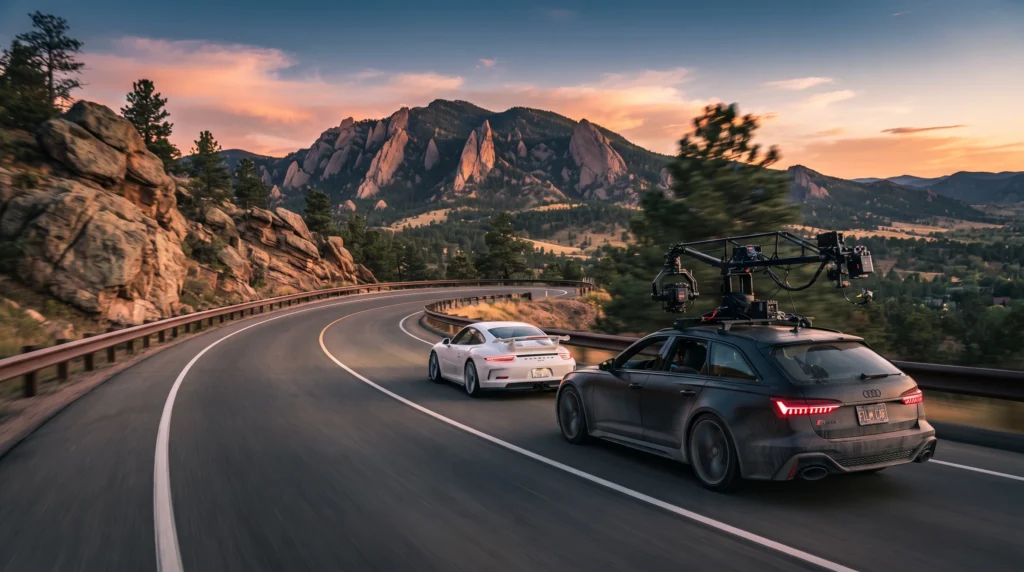
For outdoor videography in mountainous terrain specifically, one of the strongest multi-camera combinations pairs a ground operator following the athlete on foot or by bike with a drone tracking from the air. The aerial perspective gives the terrain scale that ground cameras cannot capture, and the ground camera gives the intimacy and detail the drone cannot. Any capable operator working outdoor sports should be able to run both, or coordinate with a partner who can. This is one of the reasons a company offering action videography services in Boulder with integrated drone capability tends to deliver a stronger finished piece than a single operator with only ground gear.
Can You Hire an Action Videographer for a Single Event or Ongoing Content Creation?
Both models exist, and choosing between them shapes your relationship with the videographer and the cost of the work.
Single-Event Coverage
Hiring for a single event, a race, a competition, a one-off shoot, works well when you have a specific project with a defined start and end. The videographer arrives prepared, captures the day, delivers the edited piece within an agreed turnaround, and the engagement is complete. It is the right model for personal projects, one-time events, and anyone testing a videographer before a longer commitment.
The main downside is the learning curve. A first-shoot videographer does not yet know your style, your sport at the level you practice it, or what you specifically want out of the footage. That familiarity has to be built.
Ongoing Content Creation
Ongoing engagements, monthly retainers, seasonal partnerships, brand relationships that span a year, produce noticeably better work over time because that familiarity accumulates. The videographer learns your voice, your audiences, the moments you value, and the moments your sponsors respond to. Turnaround gets faster because the workflow stabilizes. Costs per deliverable often come down because setup, scouting, and communication are amortized across many shoots.
Ongoing content is the standard model for sponsored athletes, brands with regular campaigns, and creators building an audience. If you are producing content regularly, this is worth exploring even if your initial project is a one-off. A single event is often how the relationship starts; the ongoing partnership is what it becomes if the first shoot goes well.
Ask directly: do you offer retainer or ongoing packages, and what does that structure look like? A company built for both models will have a clean answer for each.
Turnaround: Highlight Reel vs. Full-Length Edit
Turnaround is one of the most common sources of client frustration in videography, and it is almost entirely a mismatched-expectations problem that is solvable up front.
Highlight Reels
A highlight reel, typically 30 seconds to about 2 minutes, is fast-turnaround content. The clip count is small, the edit is punchy, and the story is compressed into a hook, a build, and a payoff. For a well-run action video production team with modern workflows, a highlight reel from a single shoot day usually delivers within about a week, sometimes faster. Race and event coverage is often turned around even faster, sometimes within 24 to 72 hours, because the value of the content decays quickly on social.
Full-Length Edits
A full edit, 3 to 6 minutes for a personal project, longer for a brand film, is a different beast. Story development, sequencing, music selection and licensing, color grading, sound design, and rounds of client revisions all take real time. For a full-length action edit, expect somewhere between two and four weeks under normal circumstances, and sometimes longer for larger productions with multiple stakeholders. If your deadline is shorter than that, say so early and confirm the videographer can actually hit it before you book.
Get Turnaround in Writing
Whichever product you are hiring for, get the delivery date, the number of revision rounds, and the file formats you will receive documented in the agreement. A vague promise of “soon” is one of the most common ways a project spirals. A dated commitment protects both sides.
Questions to Ask Before You Book
A short call reveals most of what a website cannot. Ask these directly:
- Which specific sports and disciplines have you shot in the last year?
- Can I see two or three finished edits similar to what I need?
- Do you carry liability insurance, and if drones are involved, Part 107 certification?
- What camera systems do you use for action work, and do you shoot multi-camera?
- Do you offer packages tailored to athletes, brands, or personal projects?
- Is this a single-event booking or can it become an ongoing engagement?
- What is your turnaround for a highlight reel? A full-length edit?
- How many rounds of revision are included, and what do additional revisions cost?
- What deliverables do I receive, edited video, raw files, social cuts, stills?
- What is your policy if weather forces us to reschedule?
The pattern to look for is not any single answer but the specificity of the answers overall. Confident, detailed responses signal a company that has done this work at scale. Vague ones signal a company still working out its own model.
Local Ground and Conditions
For outdoor videography specifically, familiarity with the actual environment matters more than most clients realize. A local operator knows the terrain, understands seasonal weather and light, and can plan a shoot around wind, temperature, and daylight without the client having to explain any of it. That knowledge translates directly into better footage and fewer wasted shoot days.
Mountain environments in particular reward local expertise. Higher elevations mean thinner air, which reduces a drone’s lift and shortens flight time, so aerial coverage requires more batteries and tighter planning than at sea level. Sudden weather shifts, valley winds, and afternoon storm patterns are things a local videographer plans around by second nature. An operator working the same ground for years also knows which locations film beautifully, which are less legal or less accessible than they look, and where the light does something special at a specific hour.
Red Flags Worth Walking Away From
- Cannot show finished edits, only a highlight reel of best clips or single frames.
- Portfolio in a completely different category than your project.
- Cannot explain their approach to your specific sport when asked.
- No insurance, or evasive answers about it.
- Vague pricing with no clear breakdown of deliverables and revisions.
- No written agreement on turnaround, revisions, or ownership.
- Slow, careless communication during the quoting phase.
- Promises that ignore weather, terrain, or the realities of shooting outdoors.
Conclusion: Hire the Videographer Who Already Sees the Story
The best action videographers are the ones who could describe your shoot before you did. They know the sport, they see the story, they own the gear that lets them chase it, and they turn footage into an edit that reads the way the day actually felt. Get those right and everything else, insurance, contracts, turnaround, sorts itself out around a foundation that already works.
If you are shooting in Boulder or across the Front Range, Creative Drone Solutions covers outdoor action with the specific literacy the region demands: climbing in Eldorado Canyon, cycling up the canyons, trail running, ski days, and race coverage, shot in 4K by Part 107 certified pilots and insured operators who know how to fly, and film, at altitude and in wind. Explore their action videography services in Boulder, or call (720) 534-6877 to talk through your project. Book the crew that already sees what you are trying to make.
FAQs
How do I choose the best action videography company?
Look for finished edits in your specific discipline, evidence they understand the sport, appropriate gear including stabilized cameras and multi-camera capability, insurance and any relevant drone certification, and packages that fit your audience, athlete, brand, or personal. Judge the finished edit, not the best individual clip.
Do action videographers offer packages for athletes, brands, or personal projects?
Yes, and matching the package to your category matters. Athletes usually need to highlight reels and cut content on ongoing timelines. Brands need story-driven pieces with multiple deliverables from a single shoot. Personal projects fit shorter, more affordable packages centered on a single event or day.
What is the turnaround time for a highlight reel vs. a full-length edit?
A highlight reel from a single shoot day generally delivers within about a week, and sometimes faster for event or race coverage. A full-length edit typically takes two to four weeks under normal circumstances, longer for larger productions with multiple stakeholders. Confirm the delivery date in writing.
Do action videographers provide multi-camera coverage?
Most established companies do, running two or more cameras across a shoot, often combining a ground operator with a drone in the air. Multi-camera coverage is close to essential for finished pieces that feel cinematic rather than one-perspective. Confirm whether it is included in your package or an add-on.
Can I hire an action videographer for a single event or an ongoing engagement?
Both models exist. Single-event bookings suit specific projects and personal shoots. Ongoing engagements, retainers or seasonal partnerships, tend to produce better work over time because the videographer learns your voice and sport, and are the standard model for sponsored athletes and brand clients.
What gear should a professional action videography company use?
Look for stabilized cameras or gimbals, gimbal drones for aerial pursuit, high frame rates for slow-motion, ND filters for hard sunlight, action cams for POV angles, and reliable audio when it matters. Gear alone does not make a good videographer, but its absence limits what any videographer can deliver.
Do I need to hire a videographer who knows my specific sport?
Ideally yes. A videographer who understands your sport knows when to be ready, where the story lives, and what to include for the shot to make sense to another practitioner. You can test this on the intake call by asking what part of the sport they find most cinematic.
How does weather affect an action video shoot?
Weather can genuinely ground a shoot, especially outdoors and at altitude. Wind ground drones, rain and snow shut down most gear, and mountain light shifts fast. A professional builds a weather window into the plan and communicates honestly about rescheduling rather than promising footage regardless of conditions.